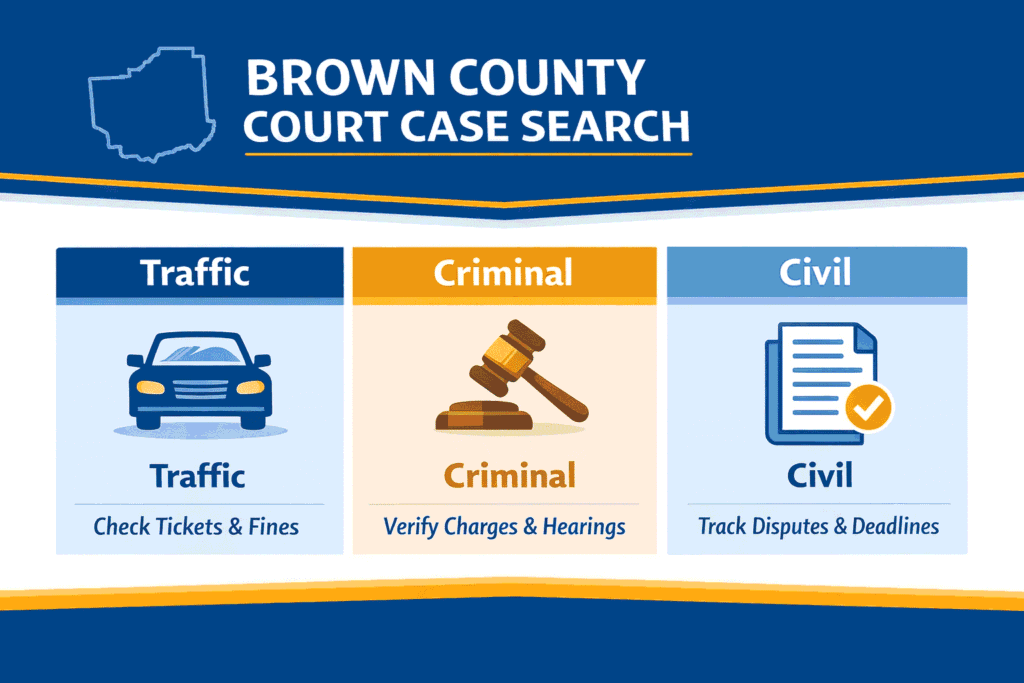
Searching for court cases and records in Brown County can be confusing and overwhelming. Whether you want to check a traffic ticket, verify a criminal case, or review a civil dispute, navigating the system often involves multiple websites, complicated terminology, and unclear instructions. Many users waste time trying to figure out where to start, what records are public, and how to interpret the information they find.
This guide breaks down the process step by step. You will learn how to search traffic, criminal, and civil cases efficiently, understand legal terms, check record accuracy, and take the proper next steps after locating a case. By following these instructions, you can save time, avoid mistakes, and ensure you are acting in line with legal rules.
Understanding Brown County Court Records
Brown County court records are divided into three main types: traffic, criminal, and civil. Traffic records include tickets, fines, and pending violations. Criminal records document arrests, charges, convictions, and probation. Civil records involve disputes between individuals or organizations, such as property issues, contract disputes, and small claims.
It is important to know which records are public and which are restricted. Adult criminal, civil, and traffic records are generally available online or at the clerk’s office, while sealed cases and juvenile records require special permission. Understanding these differences helps users access the correct information without breaking any rules.
How to Search Traffic Cases
Traffic case records can be scattered across different databases, which makes finding them frustrating. To search for a traffic case, visit the Traffic Case Search section of the Brown County Clerk of Court website. Enter the driver’s name, ticket number, or license plate. If there are multiple records, use the date filters to narrow down results. Once a case appears, you can view the status of fines, payments, or upcoming court dates.
Even when using the official online portal, some records may be outdated or incomplete. It is a good idea to verify important information directly with the clerk to ensure accuracy, especially if you need to pay a fine or attend a court hearing.
How to Search Criminal Cases
Criminal records provide details about arrests, charges, convictions, and hearings. To access them, go to the Criminal Case Records section on the clerk’s website. You can search using the defendant’s name, case number, or filing date. Public records will show case status, charges, and hearing dates. Sealed or restricted cases cannot be accessed online and require contacting the clerk directly.
Many users struggle with legal terms when reviewing criminal records. Words like plea, motion, and docket are common but can be confusing. Understanding these terms ensures you can interpret records correctly and decide on the next step, whether it is attending a hearing, paying fines, or consulting a lawyer.
How to Search Civil Cases
Civil records cover disputes between parties, including property conflicts, contract disagreements, and small claims. To search, use the Civil Case Search section of the clerk’s website. Enter the party name, case number, or filing date. The search results will display case type, status, and any upcoming hearings or deadlines.
Civil cases often involve multiple filings, so monitoring updates is important. Missing a filing date or hearing can affect the case outcome. Users should consider keeping a personal record of all case activities to track deadlines and filings efficiently.
Fees and Payment Information
Accessing court records may involve fees, especially for certified copies or official documents. Most online case views are free, but certified copies usually cost $5–$10 per page. Payment can be made online with a credit or debit card or in person using cash or check. Some records can be accessed for free if an official copy is not required.
Helpful tips for payments:
- Verify the fee schedule on the clerk’s website before requesting documents.
- Keep receipts or confirmation numbers when paying fines or requesting official copies.
Ensuring Record Accuracy
Online court records may not always reflect the most recent updates. Users should verify filing dates and compare multiple sources when necessary. For complete certainty, contacting the clerk’s office or requesting an official copy ensures the information is accurate and reliable. Accurate information is particularly important for criminal or traffic cases, where incorrect details could lead to fines or missed court appearances.
Understanding Legal Terms
Legal jargon can be intimidating. Here are some common terms you may encounter:
| Term | Meaning |
|---|---|
| Plea | Defendant’s formal response to charges |
| Docket | Official schedule of court cases |
| Motion | Request submitted to the court |
| Hearing | Court session where the case is discussed |
| Disposition | Final outcome of a case |
Knowing these definitions helps users interpret records and plan the next steps, such as paying fines, attending hearings, or consulting an attorney.
Privacy and Legal Access
Not all records are public. Juvenile cases, sealed records, and certain restricted cases require special permission to access. Adult traffic, civil, and criminal cases are generally available to the public. Understanding what records are legally accessible protects privacy and ensures compliance with the law.
Next Steps After Accessing Records
After locating a case, the actions you take depend on the type of record:
- Traffic tickets: Pay fines online or schedule a court date.
- Criminal cases: Contact the clerk or an attorney for next steps.
- Civil cases: Monitor deadlines and hearings to ensure compliance with court rules.
Following the correct next steps ensures that you avoid penalties and handle cases responsibly.
Checklist: Brown County Court Case Search
| Case Type | How to Search | Key Notes |
|---|---|---|
| Traffic | Name, ticket #, license | Check fines & court dates |
| Criminal | Name, case #, date | Verify status & charges |
| Civil | Party name, case # | Note hearing dates & deadlines |
Conclusion
Searching for traffic, criminal, and civil court records in Brown County can be straightforward when you know the process. By following this guide, understanding record types, verifying information, and taking the appropriate next steps, you can access the records you need confidently and efficiently, stay organized, and avoid unnecessary complications.
FAQs
Q1: Can all court records be accessed online for free?
Most records are available online, but certified copies or official documents may require a fee.
Q2: What if a case cannot be found?
Check spelling, case numbers, and date ranges. Contact the clerk if it is still missing.
Q3: Are juvenile or sealed cases public?
No. They require special permission for access.
Q4: How do I pay a traffic ticket in Brown County?
Payments can be made online or in person using cash, check, or card.
Q5: What if online records are outdated?
Verify with the clerk’s office or request an official copy.